
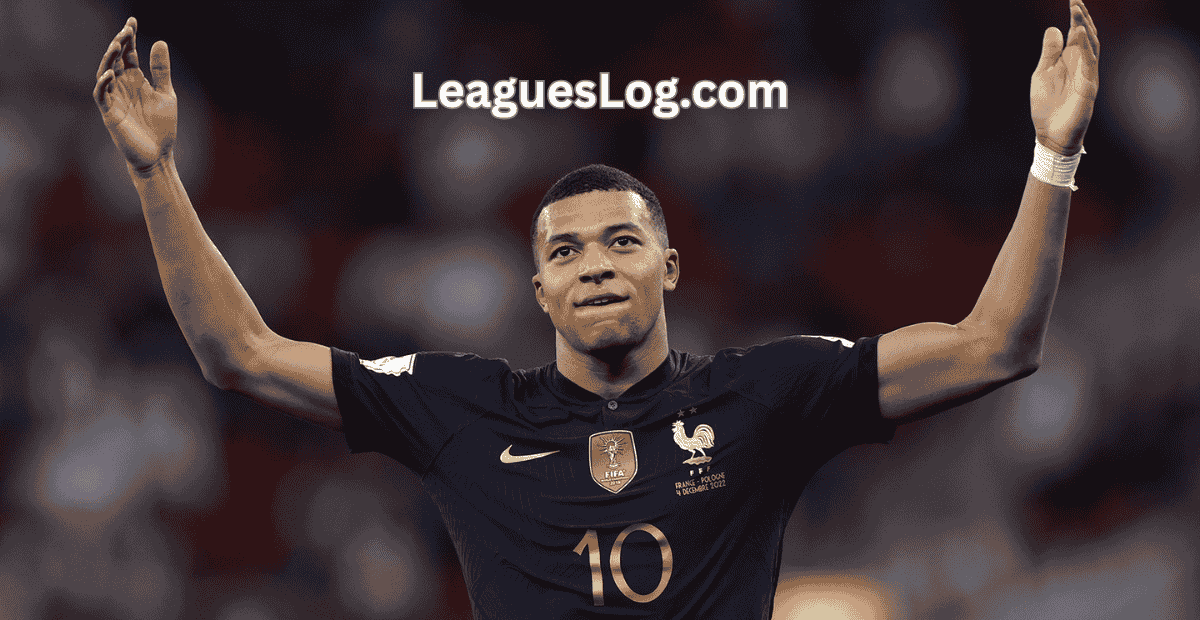
Mbappé match analysis often begins with a recognition of how rare it is for a single player to influence a high-stakes match so dramatically. Few players in modern football possess the combination of explosive speed, flawless technique, and calm decision making that defines Kylian Mbappé. Every generation has one or two attackers capable of altering a match in an instant, and in recent years, he has proven himself to be that player time and again. His ability to transform a stagnant game into a moment of brilliance reflects not only his physical gifts but also his intelligence, awareness, and evolving leadership on the pitch. One iconic example came during a recent match, where a single solo run shifted the tempo, mentality, and outcome for both teams involved.
FIFA Announces ASEAN Cup: Southeast Asia’s New Football Frontier
The Tactical Setup That Led to the Turning Point
Before Mbappé’s game-changing run, the match was locked in a stalemate. Both teams were tactically disciplined, the midfield zones were congested, and clear chances were rare. His team maintained more possession, yet without penetrating the opponent’s defensive structure. The opposition sat compact in a 5-3-2 shape, forcing the ball wide and closely tracking the attacking midfielders. Without vertical passing lanes, the forwards rarely received the ball between the lines.
A key part of any Mbappé match analysis is understanding how teams attempt to neutralize him. Defenders typically drop deeper to prevent him from exploiting space behind them. They double-mark his inside cutting angles and try to force him into areas where he cannot accelerate. In this match, the defenders executed the plan effectively for most of the first half, keeping his touches limited and forcing him to play with his back to goal.
Yet even the most disciplined defensive structures have their limits. Over time, constant pressure and recovery runs wear defenders down. By the time the decisive moment arrived, small gaps had begun to appear in the opposition’s shape. A slightly mistimed step, a hesitation in transition, or a misplaced clearance can become the opening he waits for. This tactical landscape set the stage for what would become the turning point of the match.
Kylian Mbappé – Ligue 1 Official Profile
The Build-Up to the Solo Run
The play began with what appeared to be a routine defensive recovery. After winning the ball near midfield, Mbappé’s teammate quickly released a short pass toward him on the left flank. At first glance, it seemed like another standard transition attempt, but the positioning was crucial. Mbappé received the ball with space to turn, a rare moment in this tightly contested match.
This moment alone highlights a central theme in Mbappé match analysis: he does not require much space to generate danger. A single forward-facing touch is enough to place defenders on high alert. As soon as he turned, two defenders reacted simultaneously, one approaching from the inside and the other from the touchline. Rather than immediately accelerating, Mbappé paused, a subtle hesitation that allowed him to read both players’ movements. This small decision shifted control to him, forcing the defenders into reactive positions.
With one rapid step forward, he eliminated the first defender by pushing the ball past his right side. The second defender attempted to match his acceleration but struggled to adjust once Mbappé shifted the ball onto his left. This sequence showcased another aspect that makes him so difficult to contain: his directional changes at top speed. The moment he accelerated, the momentum of the match shifted with him.
Breaking Through the Defensive Line
Having bypassed the first line of pressure, Mbappé surged into the open channel between the center-back and wing-back. This area, often referred to as the half-space, is a crucial zone for attackers because it forces defenders into split-decision situations. One wrong step can expose the entire back line.
The central defender attempted to close him down, but Mbappé’s speed advantage was overwhelming. His stride frequency increased, and his control remained precise despite his pace. As he approached the penalty area, he analyzed the goalkeeper’s position and the trailing defenders. This is where his maturity becomes evident. Early in his career, he relied heavily on instinct and speed. Today, his decision making under pressure has evolved to a new level, allowing him to execute the perfect option at the right time.
Instead of rushing the finish, he slowed slightly, shifting the ball to create a shooting lane. The goalkeeper was drawn into committing early, expecting a near-post strike. Instead, Mbappé opened his body and curled a low, controlled shot into the far corner. The stadium erupted as the net rippled, and the tactical complexion of the match instantly transformed.
How the Solo Run Shifted Momentum
Once the goal was scored, the dynamic of the match changed dramatically. His team, previously frustrated by the opposition’s defensive shape, now had renewed confidence and momentum. The opponents, on the other hand, were forced out of their compact structure and had to pursue an equalizer. This opened more space across the pitch, particularly in transition, where Mbappé thrives.
A thorough Mbappé match analysis must consider not just the goal itself but also the psychological effect it imposes on both sides. His presence demands constant defensive attention, but once he scores in such spectacular fashion, defenders become hesitant, less aggressive, and more prone to mistakes. The opposition adjusted by pulling an extra midfielder wide to support defensive transitions, which in turn weakened their ability to build through the center.
With more space now available, Mbappé’s team began generating additional chances. Their tempo increased, their passing became more vertical, and their press intensified. The solo run had not only broken the deadlock but had redefined the rhythm of the match. In high-level football, such a shift often determines the final outcome.
Technical Breakdown of the Solo Run
From a technical standpoint, the play can be divided into four key phases: control, acceleration, direction change, and finishing. Each phase demonstrates an attribute that sets Mbappé apart from most attackers.
- Control
Receiving the ball in stride while facing pressure requires exceptional first-touch precision. Mbappé shielded the ball and positioned his body to trigger both defenders into committing. - Acceleration
His burst of pace after the hesitation move was perfectly timed. He shifted from a composed stance to full sprint within a single step, catching the defenders flat-footed. - Direction Change
The subtle inside-outside movement forced the central defender to adjust his body position, creating the channel Mbappé needed to break through. - Finishing
The final shot was composed, accurate, and well-placed. Instead of relying solely on power, he prioritized angle and placement, showcasing his growth as a finisher.
Breaking down the play in this way not only highlights his unique skill set but also reinforces why this moment stands as a critical case study in modern football analysis.
Why Mbappé Excels in High-Pressure Moments
Some players perform best in structured environments, while others thrive in moments of chaos. Mbappé belongs to the latter category, but with sophistication. His ability to read defensive arrangements, anticipate movements, and execute instinctive decisions under pressure gives him a rare edge.
Another important aspect is his mental resilience. Whether his team is dominating or struggling, he plays with confidence and belief. This mentality enables him to take risks when necessary, without being deterred by earlier setbacks. His leadership style is evolving as well; rather than waiting for service, he increasingly creates opportunities himself.
This is especially clear in the context of Mbappé match analysis, where his performances consistently show that he is not only a finisher but also a creator. His dribbling draws defenders out of position, his movement destabilizes defensive lines, and his vision allows him to make the correct decision even at top speed. These qualities combine to make him one of the most influential forwards of the current era.
The Opponent’s Tactical Response
After conceding, the opposing coach made immediate adjustments. The wing-backs were instructed to stay deeper to reduce the risk of isolation. The midfielders were told to stagger their positioning to avoid leaving gaps during transitions. Most importantly, the defenders were tasked with staying tighter to Mbappé while avoiding overcommitting.
However, these changes came with their own risks. By sitting deeper, the opponents surrendered more midfield control. Their attempts to mark Mbappé more aggressively created pockets of space for his teammates. Ultimately, the tactical response was reactive rather than proactive, and as the match progressed, it became clear that the psychological impact of the solo run had tilted the momentum firmly away from them.
This demonstrates a recurring theme: once he shifts the tempo, opposing teams struggle to regain their composure. The run did not just produce a goal but also dismantled the opponents’ confidence in their defensive structure.
The Broader Impact on His Team’s Strategy
Following the breakthrough, Mbappé’s team adjusted their approach. Rather than circulating the ball slowly, they played with more verticality and purpose. The full-backs pushed higher, the midfielders took more risks, and transitions became sharper. Mbappé himself began drifting between the central and left channels, exploiting newly available spaces.
This fluidity created numerous opportunities. His presence forced defenders to constantly adjust, creating overloads in other areas. The tactical balance had shifted so significantly that the match began to look entirely different from the slow and structured contest seen earlier.
Such a transformation illustrates why his influence goes beyond individual brilliance. He shapes the identity of his team’s attack, dictating tempo and forcing opponents to adapt. This is a key point often explored in advanced Mbappé match analysis.
A Career Defined by Big Moments
Mbappé’s catalogue of defining moments continues to grow, and performances like this add to his legacy. Whether on the domestic stage or international level, he repeatedly demonstrates the ability to deliver when it matters most. His solo run in this match is one of many examples of his growing stature as a global football icon.
He is no longer simply a rising talent. He is an established match winner with significant influence on tactics, team psychology, and the global football narrative. Analysts, coaches, and fans study his performances closely because they embody the evolution of the modern forward: fast, intelligent, versatile, and relentless.
The match in question will be remembered not only for the final score but for the moment that changed everything. And that moment belonged entirely to Kylian Mbappé.
FAQs on Mbappé match analysis
1. What made Mbappé’s solo run so impactful in the match?
His solo run not only broke the deadlock but also shifted momentum, forcing the opponent out of their defensive structure. This opened up the game for his team and changed the overall match dynamic.
2. Why is Mbappé so effective against compact defensive blocks?
He thrives in tight spaces due to his acceleration, directional changes, and ability to read defenders. Even well-organized blocks struggle to contain him for an entire match.
3. How does Mbappé’s decision making contribute to his success?
His composure and ability to choose the right moment to accelerate or cut inside make him unpredictable. This is a major reason why Mbappé match analysis often highlights his maturity in crucial phases.
4. What tactical adjustments did the opponents make after his goal?
They dropped deeper, committed extra players to his side, and tried to double-mark him. However, these adjustments created space for his teammates and weakened their midfield control.
5. Does Mbappé often influence matches this way?
Yes, he is known for delivering decisive moments when needed. His combination of intelligence, speed, and control allows him to change a match’s tempo instantly.
Conclusion on Mbappé match analysis
Kylian Mbappé once again demonstrated why he is considered one of the most influential forwards of the modern era. His solo run was more than a display of technical brilliance; it was a tactical turning point that redefined the rhythm, psychology, and structure of the match. Moments like these explain why teams prepare extensively to contain him and why analysts continuously study his movements. Whether through a burst of acceleration or a perfectly timed finish, Mbappé remains a player capable of rewriting a game’s narrative within seconds. This match stands as a clear example of how one moment of individual brilliance can shift momentum, inspire teammates, and ultimately determine the final result.