
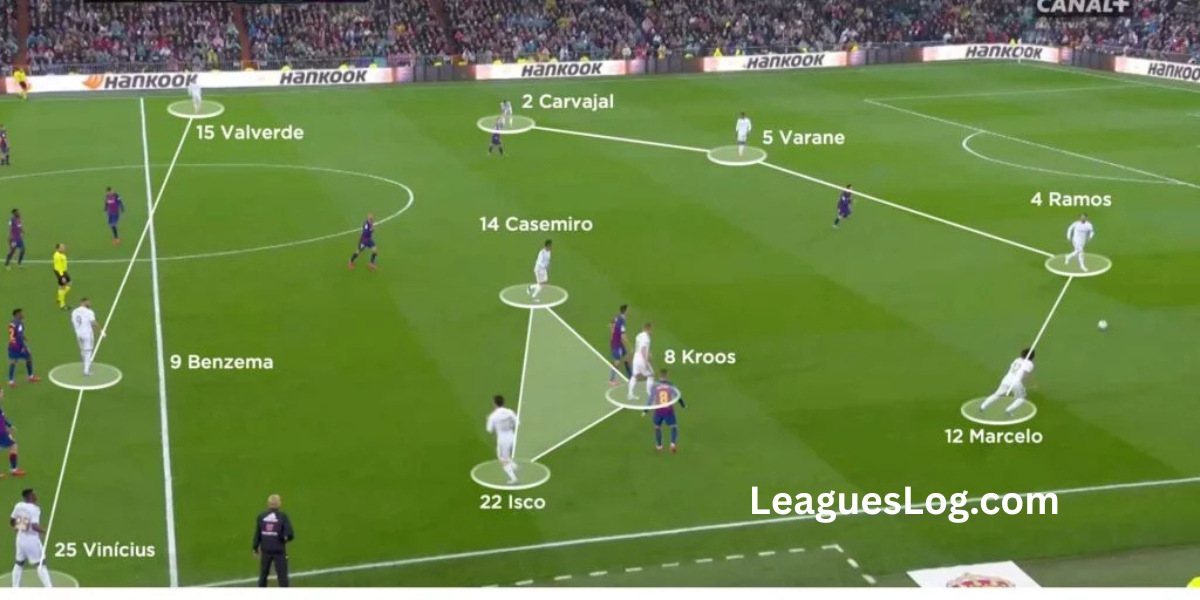
Football is a game of skill, passion, and strategy. While fans often focus on goals and star players, much of what happens on the pitch is shaped by tactics. One of the most important tactical elements in football is formations. Understanding Football Formations helps beginners appreciate how teams attack, defend, and control matches.
This guide explains Football Formations in a simple and beginner-friendly way, using clear examples to show how each setup works. Whether you are a new fan, a casual viewer, or someone learning the game, this article will help you understand the tactical side of football.
Fastest Fifties in Domestic Cricket History Explained
What Are Football Formations?
Football Formations refer to how players are arranged on the pitch. A formation describes the distribution of players across defense, midfield, and attack, excluding the goalkeeper.
For example, a 4-4-2 formation means:
- 4 defenders
- 4 midfielders
- 2 attackers
These numbers help explain a team’s tactical approach and balance. Football Formations are not fixed; players often change positions during a match depending on the situation.
Why Football Formations Are Important
Football Formations play a crucial role in determining how a team performs. The right formation can:
- Strengthen defensive stability
- Improve ball control in midfield
- Create goal-scoring opportunities
- Neutralize an opponent’s strengths
Coaches carefully choose Football Formations based on player abilities, opposition tactics, and match objectives.
Basic Structure of Football Formations
Most Football Formations are built around three key units:
- Defense – Protects the goal and starts build-up play
- Midfield – Connects defense and attack
- Attack – Creates and finishes scoring chances
Understanding this structure makes it easier for beginners to grasp how Football Formations work in real matches.
The Classic 4-4-2 Formation
The 4-4-2 is one of the most traditional Football Formations and is often recommended for beginners.
How It Works
- Four defenders provide defensive balance
- Four midfielders offer width and central coverage
- Two strikers share attacking responsibility
Strengths
- Simple and balanced
- Easy to understand
- Effective for counterattacking
Weaknesses
- Can be outnumbered in midfield
- Requires hardworking wide midfielders
This formation has been used successfully across different eras of football.
The Popular 4-3-3 Formation
The 4-3-3 is one of the most widely used Football Formations in modern football.
Setup
- Four defenders
- Three midfielders
- Three forwards
Key Advantages
- Strong attacking presence
- Effective wing play
- Flexible pressing options
Tactical Use
Teams using this formation often dominate possession and apply high pressure. Many top clubs rely on this setup to control games.
Learn more about modern tactics at UEFA’s official site:
The 4-2-3-1 Formation Explained
The 4-2-3-1 is one of the most structured Football Formations, offering balance between defense and attack.
Formation Breakdown
- Four defenders
- Two defensive midfielders
- Three attacking midfielders
- One striker
Why Coaches Use It
- Strong defensive shield
- Creative attacking midfielders
- Good control of central areas
This formation is ideal for teams that want defensive solidity without sacrificing creativity.
The 3-5-2 Formation
The 3-5-2 is one of the more flexible Football Formations and relies heavily on wing-backs.
Structure
- Three central defenders
- Five midfielders (including wing-backs)
- Two forwards
Strengths
- Midfield dominance
- Strong central defense
- Effective counterattacks
Challenges
- Wing-backs must cover large distances
- Requires high fitness levels
When executed well, this formation can overwhelm opponents in midfield.
The 5-3-2 Defensive Formation
The 5-3-2 is a defensive version of the 3-5-2 and is often used to protect leads.
Key Features
- Five defenders provide compact defense
- Three midfielders maintain shape
- Two attackers offer counterattacking options
This is one of the Football Formations commonly used against stronger opponents.
The 4-5-1 Formation
The 4-5-1 is designed to control midfield and limit the opponent’s attacking opportunities.
Tactical Purpose
- Defensive stability
- Compact midfield
- Counterattacking focus
This formation is often chosen when teams aim to frustrate opponents and play on the break.
Attacking vs Defensive Football Formations
Football Formations can generally be categorized as attacking or defensive.
Attacking Formations
- 4-3-3
- 3-4-3
- 4-2-4
Defensive Formations
- 5-4-1
- 4-5-1
- 5-3-2
The choice depends on match context, player quality, and tactical objectives.
How Football Formations Change During Matches
Modern football is fluid, and Football Formations often change during a match. A team may start with a defensive setup and shift to a more attacking formation when chasing a goal.
Common in-game adjustments include:
- Full-backs moving higher
- Midfielders switching roles
- Formation changes after substitutions
This flexibility is a key aspect of modern tactical football.
Role of Player Skills in Football Formations
Football Formations must suit the players available. A formation that works for one team may fail for another.
Important considerations:
- Speed of wide players
- Passing ability of midfielders
- Defensive awareness
- Physical strength of defenders
Coaches design Football Formations around player strengths rather than forcing players into unsuitable roles.
Football Formations for Youth and Beginners
For beginners and youth teams, simple Football Formations are preferred.
Recommended options:
- 4-4-2 for balance
- 4-3-3 for attacking development
- 3-5-2 for understanding space
These formations help new players learn positioning and teamwork.
Common Mistakes Beginners Make With Football Formations
Beginners often misunderstand Football Formations by assuming they are static.
Common mistakes include:
- Ignoring defensive responsibilities
- Overloading attack without balance
- Not adapting to opponents
Understanding that Football Formations are dynamic helps avoid these errors.
Examples of Famous Teams and Their Formations
Many legendary teams are remembered for their Football Formations.
Examples include:
- Barcelona’s possession-based 4-3-3
- Italy’s defensive 5-man backline systems
- Germany’s flexible pressing formations
Studying these examples helps beginners understand tactical evolution.
For historical and tactical insights, FIFA’s official resources are useful:
How to Identify Football Formations While Watching Matches
To recognize Football Formations during matches:
- Observe defensive lines when the team is without the ball
- Watch midfield positioning during build-up play
- Note forward movements in attack
With practice, identifying Football Formations becomes easier and enhances viewing enjoyment.
Why Learning Football Formations Improves Understanding of the Game
Understanding Football Formations allows fans to:
- Analyze team strategies
- Appreciate coaching decisions
- Predict tactical changes
This deeper understanding transforms casual viewing into informed analysis.
The Evolution of Football Formations
Football Formations have evolved significantly over time. From rigid systems to fluid positional play, modern football emphasizes adaptability.
Key trends include:
- Increased pressing
- Versatile players
- Tactical flexibility
The future of Football Formations will likely involve even more innovation.
Final Thoughts Before Conclusion
Football Formations are the foundation of team tactics. For beginners, learning these systems opens the door to understanding football beyond goals and highlights. With practice and observation, anyone can learn to recognize and appreciate the tactical depth that Football Formations bring to the game.
Conclusion
Understanding Football Formations is essential for anyone who wants to truly appreciate the tactical side of the game. Formations determine how teams defend, attack, and control space on the pitch. For beginners, learning the basics of Football Formations such as 4-4-2, 4-3-3, and 4-2-3-1 provides a strong foundation for understanding modern football tactics.
As football continues to evolve, Football Formations have become more flexible and dynamic. Coaches now adapt systems during matches based on opposition, player strengths, and game situations. By learning how Football Formations work, fans can enjoy matches with greater insight and develop a deeper understanding of the strategies that shape every game.
Frequently Asked Questions (FAQs)
What are Football Formations?
Football Formations describe how players are positioned on the pitch, excluding the goalkeeper. They show the balance between defense, midfield, and attack and help explain a team’s tactical approach.
Why are Football Formations important?
Football Formations are important because they influence how a team attacks, defends, and controls possession. The right formation can maximize player strengths and exploit an opponent’s weaknesses.
Which Football Formations are best for beginners?
Simple Football Formations like 4-4-2 and 4-3-3 are ideal for beginners because they are easy to understand and provide a balanced structure for both attacking and defending.
Do Football Formations stay the same throughout a match?
No, Football Formations often change during a match. Teams adjust their shape when attacking, defending, or making substitutions to respond to different game situations.
How can I identify Football Formations while watching a match?
To identify Football Formations, observe how players line up when defending, how midfielders position themselves during build-up play, and how attackers move when the team is in possession.
Are Football Formations the same at all levels of football?
The basic principles of Football Formations remain the same, but their complexity varies. Professional teams use more fluid systems, while youth and amateur teams often rely on simpler formations.
Can one Football Formation work for every team?
No single Football Formation works for every team. Coaches select formations based on player abilities, opposition tactics, and match objectives.